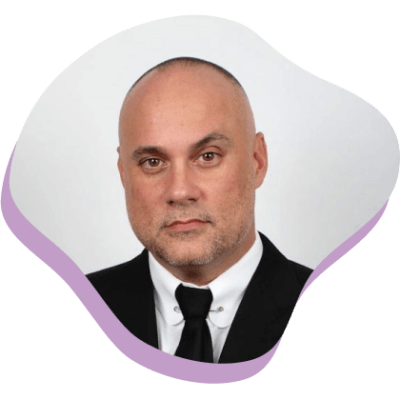
Welcome back to season 4 of the Trunk Show. I’m your host, Allison Howell, and today I’m joined by Raul Rodriguez. Raul’s high-quality rental collection at Lavish Event Rentals grew from 2R Creative, grew out of 2R Creative, his full-service event production company based in Miami, Florida.
The Trunk Show is brought to you by RW Elephant, mighty inventory management software designed to help you conquer the chaos in your event rental business and reclaim your creativity, because the world needs more of the beautiful events and environments you create.
We’ll talk about Raul’s journey from getting started in the event rental world to becoming a trusted brand for high-end rental pieces.
Raul: I honestly started my event journey in my early 20s saying, “I can do that.” And that was it.
Allison: That sounds like a familiar story.
Raul: And that was it, no training, no schooling, no prior anything, but I guess, ignorance is bliss. And so I started just doing small events here and around Miami, and slowly built up the business over the years. And then, as I built up our business, I started accumulating a warehouse full of furniture and props and pieces. And I was like, “well, instead of having this just sitting in a warehouse collecting dust, why don’t I start renting this out?” And you know just as a somewhat passive income and we started Lavish and it exploded and became its own thing. And here it is 15 years later, we’re just launching in Orlando and looking at other places in the country to expand to.
Allison: Yeah, that’s fantastic. So when you started, it was like, OK, well, it’s not hoarding if I rent it, right? So that’s kind of the way you started. It wasn’t necessarily, hey, there’s this need in the market. I’m going to start buying stuff and fill it. It was more like, hey I’ve got all this stuff. Maybe I could start this second brand.
Raul: Exactly. For the first, I would say, five or six years, we never bought inventory for Lavish. It was just stuff from our own events that would go straight into rental. No, I didn’t even address the need in the market question, I guess consciously, but I was addressing it subconsciously because while I was also designing and producing events, I was seeing the needs in the markets and the gaps in the market. So I was buying and designing for those gaps. So subconsciously, I guess I was.
Allison: Because those were things you couldn’t find other places.
Raul: Correct.
Allison: And so as you were buying those things, were you always thinking, “oh, I’m buying this for a specific event?” Or were you ever thinking, “I’ll buy this, and I’ll use this at multiple events?”
Raul: No, we look at things on a per project basis. So it was always looked at for that one specific project that we were buying or making it for.
Allison: So you were buying things for a specific event and then storing them. And then not thinking, “oh, I’m going to use this again.” But you were still storing it?
Raul: Yes. Well, I think maybe I will use it again, but you know, things become so specific for the project that it’s hard to to reuse sometimes. So and this is I mean, we’re going back 25 years. There was not the vast inventory that is available now. So it was a very different time.
Allison: But even in that, it’s like, well, you’re a creative guy. You’re always thinking about the next thing. You’re always thinking about, “oh, well this would be fun to design.” You’re not thinking, “oh I have this. I could reuse it or repurpose it,” right? So I mean, tell me about what made you hold on to it rather than get rid of it.
Raul: Because there were beautiful pieces that we’ve had the pleasure of working with some of the greatest brands in the world. They still have some sort of a sentimental attachment to the product. You know, we do a lot of corporate, so it was mostly associated with a launch of a specific product. So they had the memories and they were in perfectly good condition. They were used for three, four hours. And I was like might as well hold on to it. My philosophy on that has changed at this point. Now at this point, it’s like my real estate space is more valuable than the sofa. Out it goes. So, but you know, again, the innocence of starting this off in my early 20s.
Allison: Right. Yeah. When we’re naive at the beginning, we don’t recognize how valuable that space is, and you think, “oh I mean, why not keep it” and now the mentality is like, “why would I keep it?”
Raul: One hundred percent. Yeah.
Allison: Why did you decide to start Lavish as a second brand rather than just rent things out under the brand you already had?
Raul: Because I was concerned about people seeing it as a competition and I wanted to separate the two companies and I wanted to have a broader appeal and to have it have its own identity from the production and design company because I wanted it to rent to other designers and I saw that I how they could see it as competition to be threatened to rent it from one of their competitors so I isolated myself from it and made it its own thing.
Allison: And kind of as you did that, obviously you’re super creative and many event professionals really are super creative. You have vision, you know exactly what you want in your head and sometimes people have a hard time articulating that vision or making that vision explicit in a way that someone else can execute or emulate. How do you think you’ve been able to get out of your own way so that Lavish could be an independent business and you didn’t have to be the one touching all the things.
Raul: That was an exercise in patience, and self-restraint. And, because sometimes I see the orders coming and be like, “they want to rent that with that?” And the staff would be like “it doesn’t matter.” I’m like, “That’s right. We’re not getting paid for that. Go for it.”
Allison: Because from the beginning, you let Lavish sort of be its own thing.
Raul: Correct.
Allison: You kept staying on the production and fabrication side and sort of intentionally didn’t touch the orders in Lavish, right?
Raul: Correct. And I still am very limited in my involvement in Lavish as far as the clients and the orders and things go. Yeah, I was pretty much just creative directing in the beginning. So the overall look and feel of the brand, you know, the inventory pieces we bought, but I wouldn’t get involved in the day to day operations or the orders. But yeah, it took a lot of like, you know, seeing the stuff go on. I was like, that together, okay, you know, but now we only get involved if somebody’s ordering like a high boy cocktail table and they order like regular chairs. We’re like, “hey, that’s not gonna work height wise.” So we only get involved in those kind of situations, but design wise, knock yourself out
Allison: Yeah. And you found that that works because it allows the pieces to make money without you, right.
Raul: Correct, correct, which is, you know, always the goal.
Allison: Right. And that’s sort of why you started Lavish in the first place, right? Because over here, you’re doing this creative work and you’re, you’re doing the fabrication. You’re doing the custom builds. And then you, you want this inventory that’s sitting there to be making the money, right.
Raul: Correct. Yeah, I mean, a warehouse full of tens of thousands of dollars of furniture might as well have it try to make it do something. So it was an experiment to begin with, and it was one that, you know, paid off.
Allison: Right. Yeah. So it’s interesting. Do you feel like there’s that separation for you? Do you have to sort of shut your brain off in order to have Lavish be what it is?
Raul: At the beginning, 2R was always the favorite one because it was the big cool project that we would design all this cool and make all these new pieces for. Now Lavish is very exciting to me because now that we’ve also added tableware and we get to work with a lot of other things, I get excited over finding what’s going to be the new “it” thing. So now we actually do buy and make specifically for Lavish and I’m much more involved in the whole operation of it. So it is exciting now, Lavish for me.
Allison: So it’s not just the sort of leftover stuff. It’s actually more intentional.
Raul: Oh, a hundred percent. We make sure that everything has a companion and everything can make a collection or a grouping. When we make for our other events, it’s like, Oh, I only needed the high boy with a bar, but now we make sure that every bar has a back bar. Every table has a chair, everything. So everything coordinates and mixes pieces.
Allison: And so obviously, when you first started out, it was like, oh, these are the pieces that we had. And it works when you start out, right? You don’t have to say, oh if I’m starting a rental business, I have to have all the companion pieces, right.
Raul: Correct.
Allison: You don’t have to spend $100,000, $200,000, $300,000 on inventory just to start out. You can start out with one couch and just start renting that out of your garage, right.
Raul: Correct.
Allison: As you grow, your clientele starts having a bigger demand, right, they want to come to you for larger orders for things that go together, and you’re also looking to increase that order size, right?
Raul: Correct. Yes, definitely. So you definitely want to try to keep your clients in house, you want to become their one stop shop for all our things, at least we do. So, you know, that’s why we want to make sure that all of our things match with all of things. So it’s not so they don’t have to go to some other place for the table and us for the chair and somewhere else for a sofa. So if you want to be their one stop shop.
Allison: Yeah, you mentioned that you’ve brought tabletop in house as well. In some ways, I feel like the logistics of furniture and tableware are really different. And the economics of them is so different because you can rent a couch for three hundred dollars. But in order to rent three hundred dollars worth of forks you have to touch them so many more times, how have you found that the economics of those work together for you?
Raul: Well, our tableware is a very unique situation, and how it came about is an even more unique situation. I received a call one day from the Versace Mansion that we have here in Miami Beach, which is the former home of Johnny Versace. And they called me one day and they said, “Hey, we heard you have our tableware. We want to rent it for an event.” And I said, “you heard wrong, but that’s a great idea.” And I remember it was a Monday. And then that kind of stuck with me.
And then Tuesday, I called friends of mine in the industry, like wedding planners and other people that do socials. And I said, “hey, if somebody had like top of the line things– and this is also around the time that like Rent the Runway was coming up and like all that like renting bags and renting dresses for women was coming up– I was like, if somebody had all the top line China, I’m talking Versace, Hermes, Baccarat, Christophe, would you guys rent it?” And the response from everybody was a resounding “Yes, who has it? How can we get it?” I was, like, “Calm down. Nobody has it. Yet.”
And then Wednesday, I started contacting all the manufacturers. By the end of the week, I had brokered wholesale deals with all of them. And we were ready to go the next week.
We specialize in the top of the line brands and that’s how it happened. And then my appeal to it was aside from being the only company in the country that can do this, it’s a much smaller product than the furniture. So it gave me an opportunity now to expand the market anywhere in the United States because it’s much easier to send over a stack of plates than a couch. So that was another appeal to it.
Allison: So obviously, order sizes make a huge impact in your ability to be profitable. Because if you’re doing one order a weekend and three orders a weekend, and ten orders a weekend, the number of orders could stay the same. But if you can increase those order sizes, then that really impacts your bottom line. So what have you done to increase those order sizes?
Raul: Well, what’s been crucial to increase our order sizes is increasing our quantity in our inventory. We have a software that tells us every piece, how many times it goes out, how much money it generates. We know everything, what are our so-called greatest hits. And I’m always asking our staff, what are people asking for? What is renting the most? And then we just wanna make sure you have plenty of those pieces available because as you increase your numbers and as you increase your quantities, you’re able to service larger scale events. So we target the larger scale events that not a lot of companies can fulfill their orders for multi-hundred people, especially opening now in Orlando, which we’re talking about very large multi-thousand person events.
Allison: So you found that the more inventory you have of a particular piece, the larger scale events you’re able to service and that’s a segment of the market that there’s less competition in.
Raul: Correct. Yes. It’s the larger quantities. And then, also there’s a few companies that have larger quantities, but they tend to stick to more generic pieces, which I completely understand. That’s a much safer route. So we try to have more of our designer pieces available in larger quantities.
Allison: Right, right. Well, I’m sure there’s fewer of those events than, some of the more typical events or, some of these social events that might be wanting higher end pieces. But in your market, if there are enough events that are looking for those unique pieces, then it’s a great place for you to position yourself.
Raul: Correct, and in Miami, we’re fortunate enough to have such large flagship events like Art Basel and Formula One. So let’s say I have fifty of a table that went out for one huge event, but now I have during Art Basel where there’s a high demand, twenty can go to one event, thirty can go to another event at the same time. So, and also you have to keep in mind your repair and your revolving inventory of pieces that are available. Because even though you have fifty tables, all fifty may not be ready to go at the same time. So now you have, you know, five, ten that can be at maintenance while you rotate through the rest of your inventory.
Allison: So you’ve recently expanded outside of Miami. Tell me about that decision process and how you’ve gone about doing that.
Raul: Being in Miami, we still get asked to do events every once in a while in the surrounding areas to do Naples, Marco Island, the Keys, West Palm Beach, Orlando. So I always had my eye on Orlando for a few reasons. One because there’s demand there and two because Orlando is the second largest convention market in the United States, second to Vegas. So I knew the opportunity was there and it’s literally within reach for us. I wanted to expand there, but I wanted to make sure we were bringing something unique and that the market needed.
And again, I saw that a lot of companies were more on the generic side over there because of the large scale events. So we wanted to bring more of our design and special aesthetics to that market. So starting over there I hired a local person to be our feet on the ground and to set up our operations and sales and run everything. And we’re closing now on our showroom space and we’re working on a launch event. So we’re here, we’re in Orlando and that’s basically how we set up over there. It’s only a three and a half hour drive from us. So it’s quite easy. And then our warehouse and inventory over there is going to get larger and larger. But we kind of service both from Miami as needed for now.
Allison: How do you decide, okay, it’s time to have a warehouse and showroom in that space rather than just service it all from one location? What’s the kind of tipping point there for you?
Raul: Well, showroom space is necessary immediately. People like to come see, feel, touch. So that’s happening right away. As far as warehousing, is going to, as demand grows. I’m not going to be naive and be like, I need a 20,000 square foot warehouse immediately. It’s like, no, as it starts we’ll build our way to that. And that’s kind of how we’re treating it.
Allison: I feel like there are so many companies who grow like you’ve grown in one market, and then they see, okay, there’s more opportunity here. It’s not that they’ve just saturated the market that they’re in, but the demand is coming to them. They keep getting requests in markets that are tangential. They are getting requests outside of their service area, but it’s within reach. So if they made their operations a little more efficient, they could service those spaces a lot more easily. And then they start servicing additional markets right outside of that. And the growth is organic in that way. And it’s been interesting to me over the years to see businesses like yours grow in that way. And so I wish you all the luck there. I can’t wait to see you take Orlando by storm.
Raul: That’s the plan.
Allison: But it’s interesting for you to say that you see this need there because you’re getting these requests out of that Orlando market. I know one of the triumphs you’ve had is really building a strong brand. And it can be difficult to build a brand that stands out in a crowded marketplace. And it could be even harder to maintain inventory that doesn’t show up in everyone else’s collection. How have you built an overall brand aesthetic that’s unique and impactful?
Raul: Well, we’ve done it several ways. One, the brand image and brand identity has been very important to me. And when we started, I was fortunate enough that I could just focus on that. And I didn’t have to be weighed down by the day-to-day operations of the company. So I thought that was crucial because people make decisions with feelings. So I wanted them to immediately open up the Lavish web page or Instagram anything that they see, feel touch. And they’re like, “I want to be a part of this world. These people get me and they understand me.” So that was critical. And that was done through our marketing campaigns, which is something that we spent a lot of money on and invested in our advertising and how we position and design our website.
And you know when we started again, a very long time ago. The companies didn’t have the cutout pictures of the individual products. It was just more like people would just take a picture, put it on their website. It wasn’t as refined as it is now. And we were kind of the first ones to pioneer a way through that. So that’s the first thing about building the brand identity.
As far as differentiating ourselves from others, is twofold. One, we have our own in-house fabrication. We design and make a lot of our own pieces. Because at the end of the day… Everybody has access to the internet. Everybody can order the same things from Amazon or China or wherever they want. So you want to differentiate yourself and why are people going to go to you? So we’ve wanted to make pieces that you can only get at Lavish.
And so we’ve built that inventory over the years. And we’re about to launch actually next month. You’re getting the exclusive. We’re launching a brand new, completely customizable collection. So it’s going to be bars, tables, sofas that you can completely customize, whatever Pantone, whatever pattern, whatever brand logo, whatever you want on it.
And also, to be quite frank, I don’t usually pay a lot of attention to what the other companies are doing. I don’t like weigh myself down with like, they have this, I need to get this, or they have that, and I’m like, no, I don’t, there’s plenty of space, you know, they’re doing what they’re doing and we’re doing what we’re and that’s fine.
Allison: Well, that’s refreshing, because I think that in this world, it can be exhausting if you’re kind of always chasing someone else, right? But also, it can be really freeing if you feel like, oh, I get to run my own creative race and sort of think about what do I get to do next or what do I get to create? And I think it’s really interesting, too, when you’re thinking about creating collections that go with other pieces that you have and creating really cohesive sets of things that work well together. I think that can be really powerful and obviously it’s worked for you.
Obviously people are coming. And what’s also great about having in-house fabrication is you understand what events need. So you’re not just saying, okay, I’m making a pretty bar, right. You’re also thinking, I’m making a bar that can fit in a truck. I’m making a bar that my crew is not going to hate me every time they pick it up. I’m making a bar that the caterers like to use. I’m making a bar that’s going to last through all the ice melting on it. So you have all of those factors in mind instead of just thinking, oh, this one looks good.
Raul: Yeah, absolutely. That’s something that I am constantly talking to everybody from our delivery guys and our crew to our clients and that are in different fields in the event industry, because I see things from one perspective, but I want to see things and hear about things from all the different perspectives, I talked to the caterers, what do you guys need? What’s out there that doesn’t exist? I have this conversation all the time with my guys, even and I see them like, how are they picking things up? How are things being packed to make sure everything is as efficient as can be and then you take all that data and then that’s how you come up with new pieces and how to function better.
Allison: Yeah, you know, I really feel like I have a unique experience in the industry because I have a bird’s eye view. So I get to see like, Oh, these people are doing a collapsible bar, right? They have it with hinges. These people have a bar that’s like a flat pack, but every time they’re putting the the sides on and off. These people are like all about the wheels, right? But these people have wheeled bars, but they have an apron, so they’re hiding the wheels. These people are, like, okay, we have this bar cart, but they’ve engineered it so it can fit in a Tesla, you know?
It’s so fascinating to me to see how everybody can kind of take the same problem and engineer different solutions. And obviously everyone has a different highest good, right? Like, oh, well, our highest good is, well it’s got to fit in the Tesla because that’s the only vehicle we can use or these people tt’s all about wear and tear because our clientele is taking it offsite, it’s never seen in the inside of a ballroom, right?
And these people are like, oh, it’s got to have wheels. But it’s like, well, when you’re outside, nobody cares about wheels. It’s so interesting how different markets really have different highest goods in their calculation of what they’re really wanting it to be.
Raul: Absolutely. But with us, the number one thing is always quality and design. Design is very crucial to what we do. And we will not usually sacrifice convenience for design aesthetics. And you know, for example, like when you talk about collapsible bars and all that kind of stuff, like, yeah, I know that that exists, but none of ours are collapsible. And I know that that exists a lot in the market because they just don’t have the same feel and elevated air to them as a bar that’s completely solid. So that for us is number one. So we try to be as flexible as we can, but if it’s not the same standard as everything else, then we just won’t make it more convenient for convenience sake.
Allison: Where do you feel like you developed that aesthetic? Because you said you started young, kind of saying, I can do that. Where did that eye come from for you?
Raul: I’ve always been a lover of the arts. So everything related to art and design. I wanted to be an architect before going into this. And what I tell people is like, now I get to do the best of both worlds. I get to design and it only needs to last for four hours instead of forever. So, which is what more could you ask for? But everything that has to do with creativity I’ve been drawn to from art to architecture to photography to fashion to all of it. So that’s where it comes from.
And, you know, on the production side, we work with the biggest brands in the world, and they’re always on the cutting edge of what’s happening, what’s going on. So I get an insight to that, that I get to apply over to Lavish. And a lot of times, what was interesting is that, you know, we make like an all gold event for somebody, and then it goes into the Lavish inventory, and they are like, this isn’t moving, and I’m like, give it a moment. And then like months later, everybody wants gold and everything, so…
Allison: Yeah, that’s really fun. So you’re setting trends and people don’t even know. They don’t even know they want what you have.
Raul: I need to know what you’re going to want before you know you want it. That’s how I look at it.
Allison: That’s really fun. Yeah. Well, that’s so wonderful. Thank you so much for sharing all of this with us, Raul. I have one final question for you. What do you enjoy most about your rental adventures?
Raul: Giving people what they don’t know they want yet. That’s the most exciting thing for me. Finding the next great thing. When you click on our site and you click through the page, you’re like, that’s amazing. That’s perfect. That’s what we need. That’s what I enjoy the most.
Allison: Thank you so much. I’m excited for people to click on your site and see those things that they didn’t even know were going to inspire them next. So I appreciate you sharing your journey with us. And I’m excited to see what’s next at Lavish.
Raul: Thank you so much.
It was such a pleasure to hear Raul’s perspective on maintaining quality while scaling lavish event rentals. From familiar creative beginnings to multiple locations and a high-end reputation, Raul is a great example of what growth can look like in an event rental business.
Thank you for tuning in to the Trunk Show, brought to you by RW Elephant. I can’t wait to dive into more event rental insights this season. Be sure to join us next time. As always, I’m your host, Allison Howell. Happy renting!